Volunteers

Let’s continue for a while with the theme of the Harcourt bushfire that I’d described in the previous two posts ‘After the fire’ and ‘A sobering experience’. This time, I’d like to explore the crucial role of volunteers, before, during and after the emergency itself.
In the photo below, the Forest Fire Management (FFM) team in the white ute (pickup-truck) and the Country Fire Authority (CFA) team in the red tanker behind it have just finished putting out a still-burning fire inside a tree-trunk, two days after the fire.
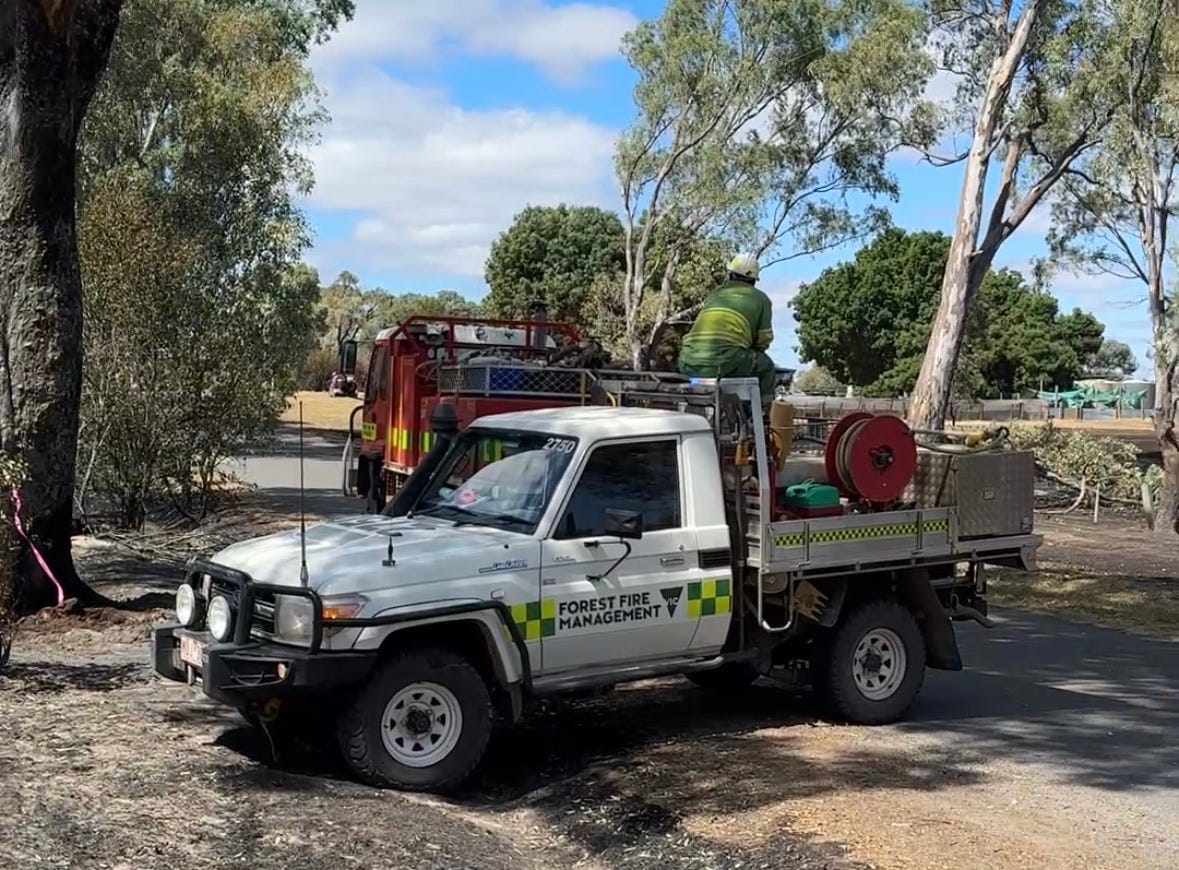
Yet there’s one key difference between the two teams. The FFM crews are paid employees of the state forestry-service, sent around the state wherever they’re needed. But in the CFA, almost no-one is paid to be there. At the local level, they’re all volunteers, serving their communities and others in the best way that they can.
Each town and village has its own CFA brigade, each with one or two fire-trucks that may sometimes be older than the people who drive them. They’re called out whenever needed, to tackle house-fires and car-crashes and whatever else might be in their local remit. But when a big bushfire hits, as it did at Harcourt, all of the brigades band together to fight the fire. At the peak of the Harcourt fire, crews from 142 different brigades were there - probably every fire-truck from up to a hundred miles away.
And yes, to be a volunteer has its own risks, its own personal challenges. In the CFA, everyone will put themselves at risk to serve others: but at Harcourt, a brigade captain continued to protect others’ homes and livelihoods even while his own house was burning to the ground.
Once the immediate danger was past, other volunteers came forward. Two days after the fire, Slade was starting to get concerned about the future survival of his livestock. His flock had survived, but he’d lost almost all of his grassland - the only paddock still intact was the one next to the farm-shed. And he now not only had his own sheep to care for, but also the neighbour’s flock who’d moved in through the burned-out fences once once their own feed had run out.
At that point, a man turned up at their door, unexpected and unannounced. He was someone they’d never met before, a farmer from Marong, a small town some twenty miles away to the north. Did they need any hay, he asked; when Slade said yes, he backed his truck into the yard, and dropped off a half a dozen big-bale rolls of hay. When Slade offered to pay, the man waved it off: “farmers help farmers”, he said, as he drove off down the road towards the next small sheep-farm in need of feed.
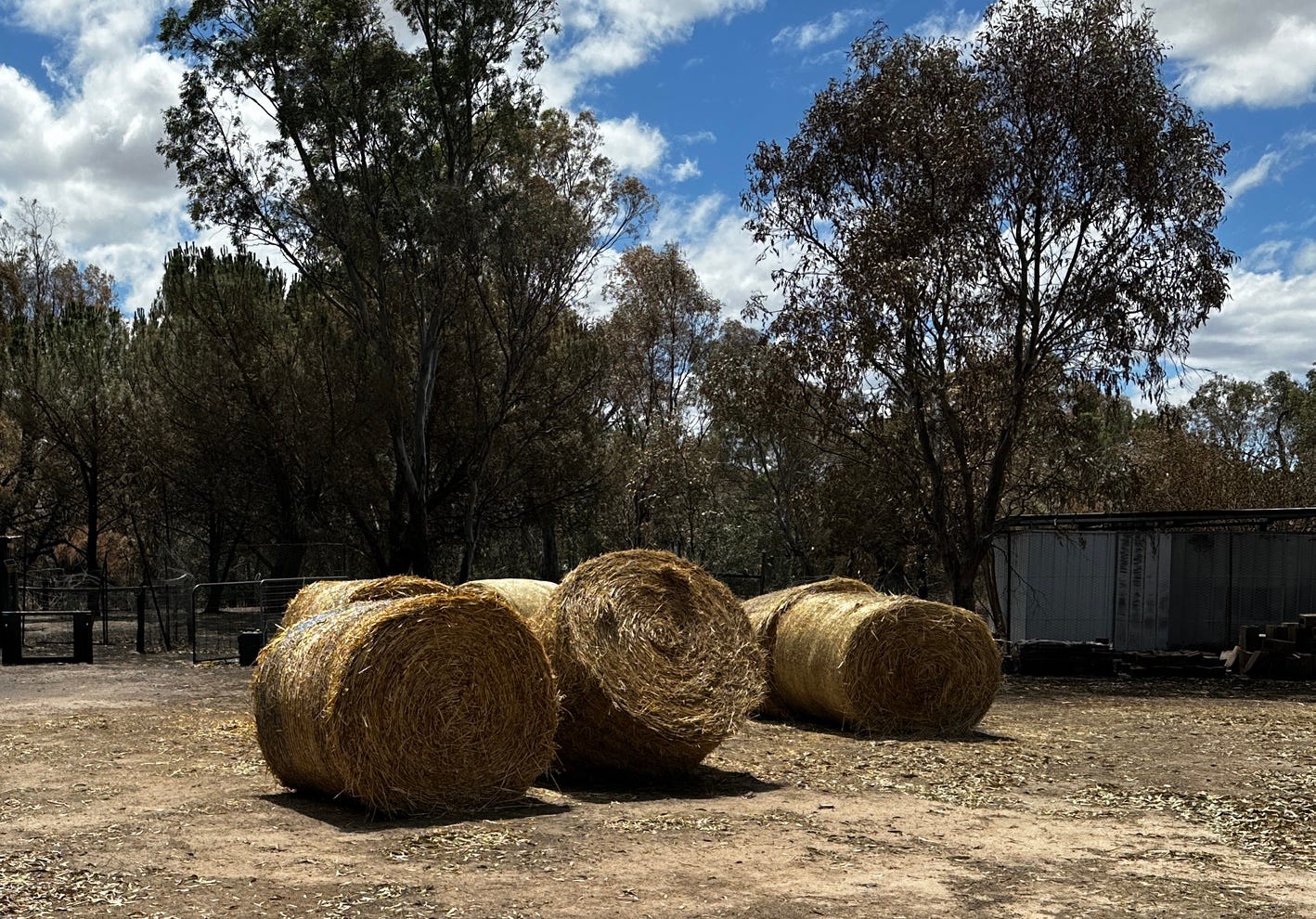
Small events like that were happening everywhere around that area over the next few days and weeks: practical support and supplies, of food, clothing and shelter, of backhoes and bins to clear burned-out wreckage, and in counselling and comfort to help cope with the human cost. People helping people, in any way they can.
The next huge task was to fix the fences, to keep the animals in place. In total, even that small farm had more than three kilometres, or two miles, of fencing - and most of that had been wrecked by the flames. Wooden fence-posts burnt out at the base; metal stakes twisted and buckled by the heat; not even the wire could be saved, because the fire had made it so brittle that it could no longer be trusted to take any load.
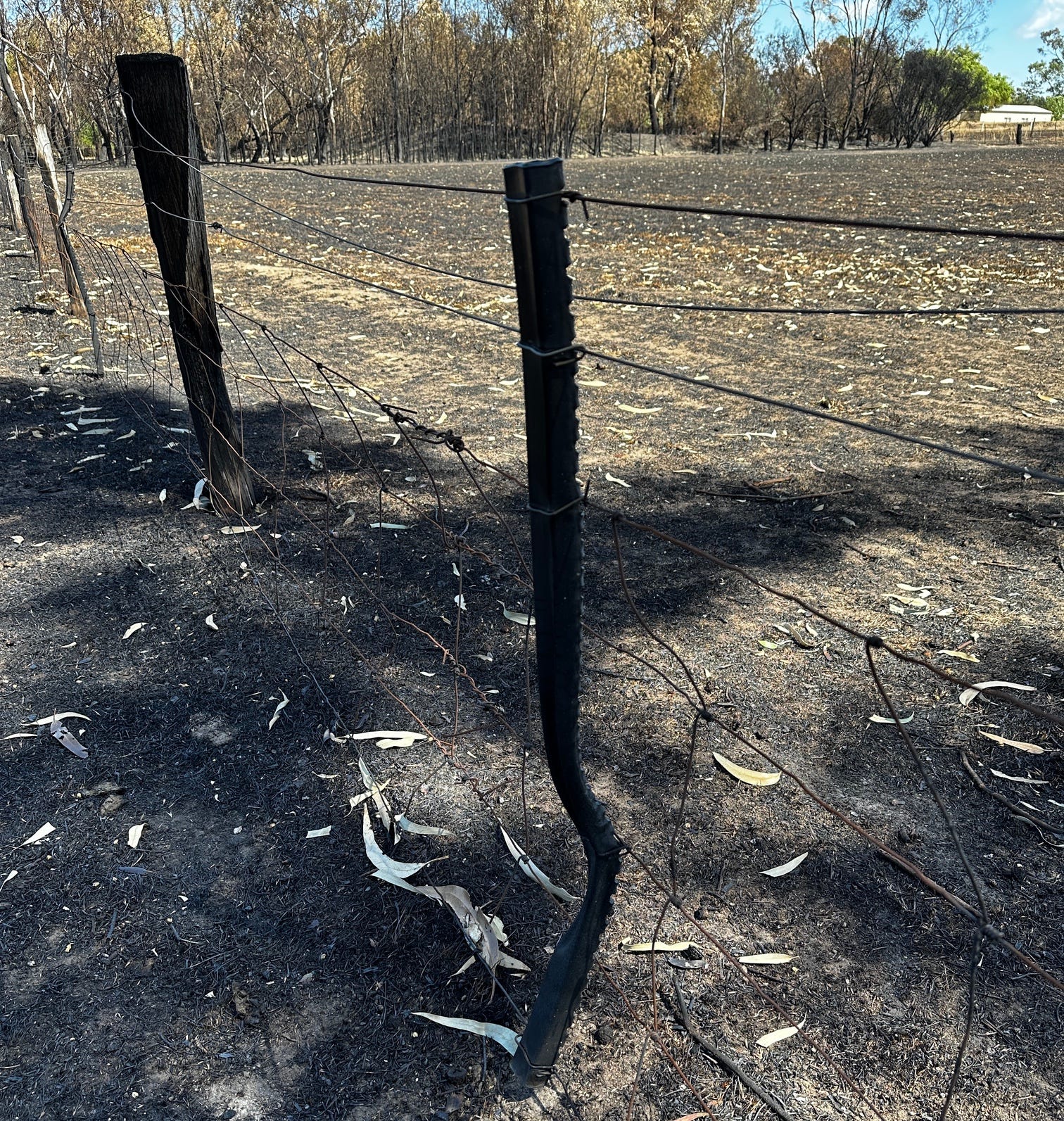
It was far too much for Slade to tackle on his own, especially with so much else that had to be repaired as fast as possible after the fire. That’s when BlazeAid came into the picture. They’re a large national group of volunteers who’ve set themselves a singular task: turn up after any natural disaster such as storm, fire or flood, set up camp somewhere in the background, and get to work on fixing the farmers’ fences. And that’s exactly what they did at Harcourt: work quietly in the background, week after week, mile after mile, at Slade’s place and at many other farms and orchards and vineyards throughout the fire-ravaged parts of the region. Once that was done, they vanished as quietly as they’d come, leaving only a small sign to commemorate their work.
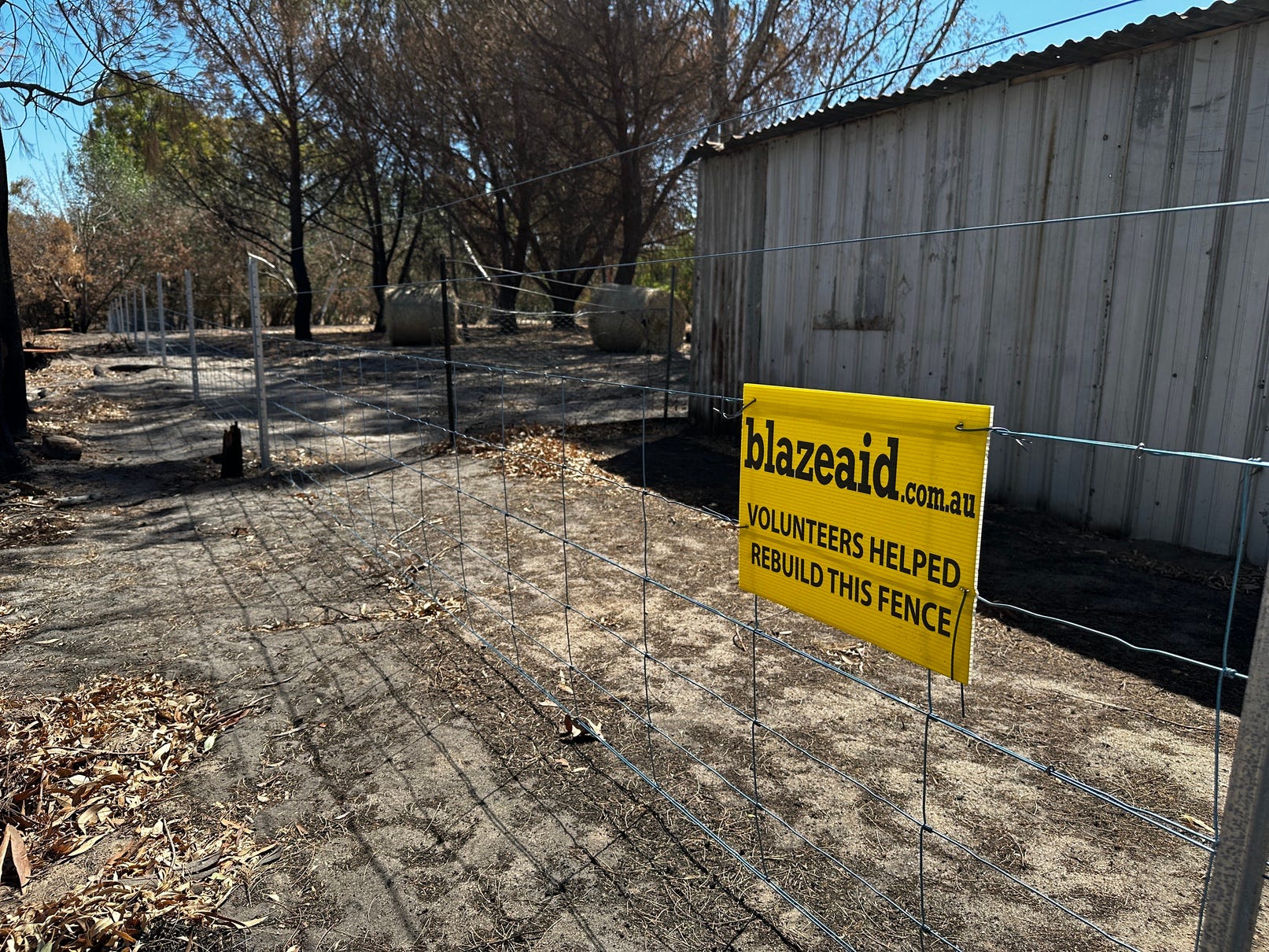
That’s what people do: they volunteer, to help each other, in whatever way may be needed, whenever the need may arise.
All of this, though, has some odd implications for how we think about economics.
The core of any economics is that value is created, value is delivered, and value is exchanged, as goods, services and the like.
In the usual model, that value is determined by possession, by withholding, and by exchange. Every transaction is assessed in monetary terms, as price, because money is assumed to be the only meaningful form of value.
Yet with volunteers, that isn’t what happens at all. Value is created, value is delivered, just like in any other economics. But there’s no price; no money exchanges hands. Goods and services are given freely, as an expression of personal choice.
The whole point of volunteering is that it’s not about money - in fact, if money does somehow force its way into the story, it often destroys the whole value of the exercise.
In short, what volunteering shows us is that an economics doesn’t need money. At all. Indeed, if anything, money seems to be what stops an economics from working, in terms of delivering what people actually need.
So yeah, volunteering has some interesting implications… We’ll explore that in more depth in the next post here.
A great story, which evidences the fact that humanity for our fellow man still exists.
Thank you Tom.